Africa does not need another mobile app. We need real businesses solving real problems.
Every young person with ambition wants to build an app. That is where the excitement is, and that is where most of the money is being wasted. Meanwhile the actual problems to solve in Africa are sitting in plain sight, unglamorous and unattended, because nobody gets applause for fixing them.
Everybody wants to build an app
Walk into any tech event in Nairobi and count how many pitches begin with a platform that connects one group of people to another.
A platform to connect farmers to buyers. A platform to connect landlords to tenants. A platform to connect job seekers to employers. The pitch decks change, the model does not.
Some of these work. Most do not, and the reason is usually the same. The connection was never the missing piece. The infrastructure underneath the connection was missing, and an app cannot manufacture infrastructure that does not exist.
The real problems to solve in Africa are physical, not digital
Look at what our problems actually are.
Farmers lose produce because there is no cold storage anywhere near them. According to a 2025 study by the World Resources Institute Africa, food loss and waste cost Kenya around KES 72 billion a year, with 30 to 40 percent of food production never reaching a consumer. That is not an app problem. That is a storage problem, a transport problem and a handling problem.
Here is the detail that proves the point. In the same research, avocados lost in the domestic market ran at about 35 percent, while the export channel lost roughly 15 percent. Same fruit, same country, same farmers in many cases. The difference is that the export chain has packhouses, pre-cooling, refrigerated transport and grading. Physical things. Concrete, steel and diesel.
Nobody closed that gap with software. They closed it by building the cold chain.
The rest of the list looks the same.
Food that is expensive and heavily treated, while almost nobody is producing affordable organic alternatives at any real scale.
Poor roads to markets, which quietly tax every trader who uses them.
Water systems that fail, then get patched, then fail again.
Waste that is never collected properly, in estates where people are willing to pay for collection.
Young people with no skills and no cheap, fast way to get them.
None of these are solved by another website.
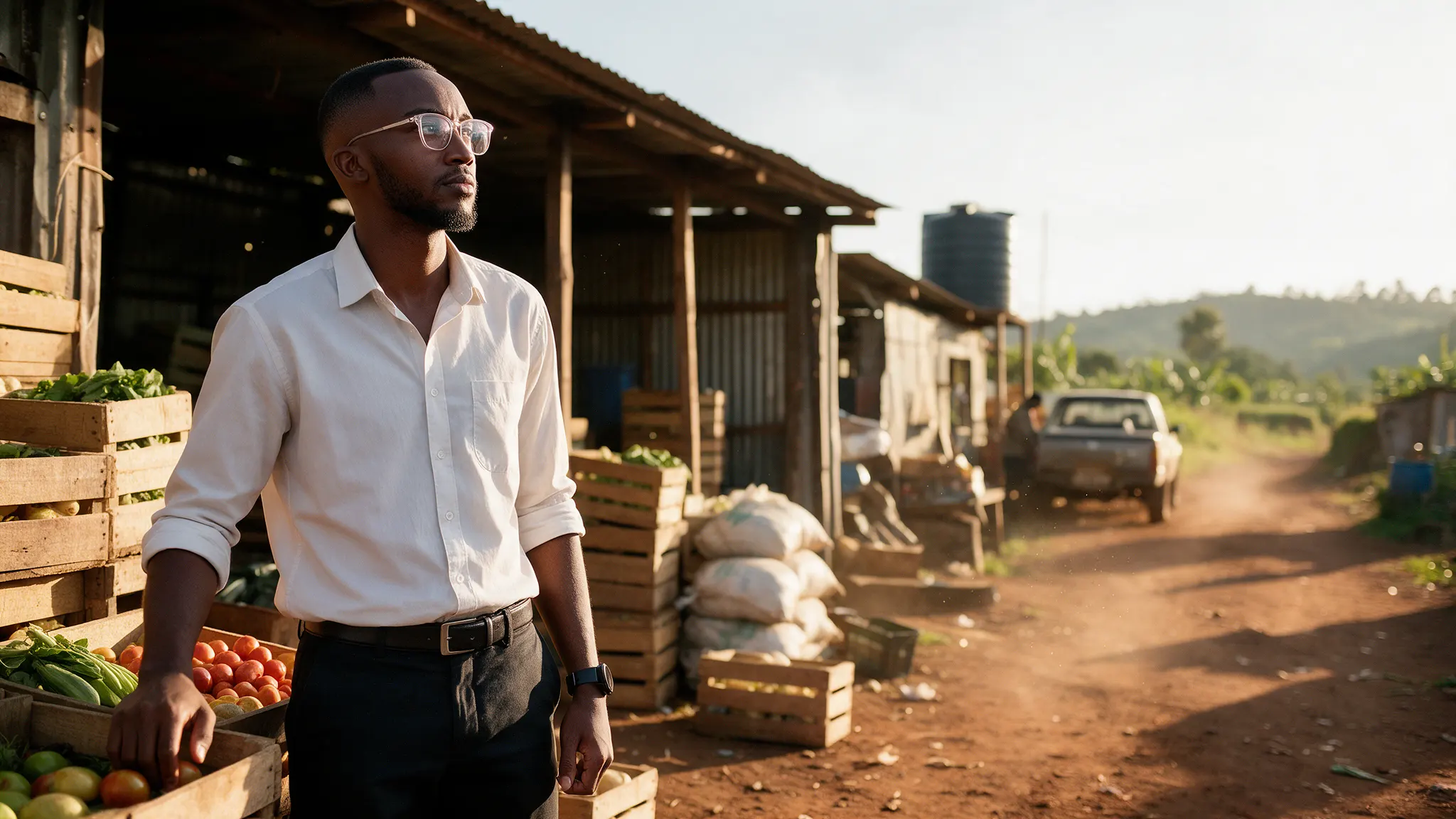
What our systems are actually missing
Look closer at the businesses already operating around you and you will notice the same 4 gaps everywhere.
Documentation. Most small businesses in Kenya cannot tell you what they did last month with any accuracy, so they cannot improve it.
Processes. The work depends on one person knowing how things are done, which means the business stops when that person travels.
Reliability. The supplier who delivers on the agreed date is rare enough that customers will pay a premium for him and stay for years.
Basic quality control. Consistency is so uncommon that being consistent is itself a competitive advantage.
That is infrastructure, and infrastructure is unglamorous work. Nobody announces a cold storage facility on Twitter. Nobody goes viral for a waste collection route that runs on time. But somebody will pay for both of those every single day, which is the only test that matters.
Silicon Valley solves convenience, we are still solving foundations
Understand something about our context, because this is where most copied business models die.
Silicon Valley builds for people who already have electricity, fast internet, physical addresses and functioning delivery systems. With all of that in place, the remaining problems are convenience problems. How do I get food 10 minutes faster. How do I skip the queue. How do I avoid a phone call.
We are at a different stage. We are still solving foundation problems. The address does not exist. The road washes out in April. The power goes at 7pm. The produce spoils before it reaches the market.
Different continent, different stage, different solutions needed. Copying a model built on top of infrastructure you do not have is how founders end up spending 3 years building the app and then discovering that the delivery never worked.
The opportunity in that is enormous. Foundation problems are bigger, more durable and far less contested than convenience problems. There are 40 people building the next delivery app in Nairobi and almost nobody building the boring thing underneath it.
Unglamorous work is where the money quietly sits
The businesses that survive in Kenya tend to be the ones nobody posts about.
Hardware supply. Transport and logistics. Water delivery. Milling. Cold storage. Fabrication. Cleaning contracts. Security. Training. These are not exciting on a pitch deck, and most of them are profitable in the first year rather than the fifth.
They share 3 features. There is existing, proven demand, so you are not educating a market. The customer pays cash or on short terms. And the barrier to entry is operational competence rather than capital, which means the person who runs it properly wins.
My own niche is dispensing rapid digital skills quickly, because that is a real gap I can see and one I am positioned to fill. Young people need employable skills in weeks, not 4 years, and the existing system does not deliver that. It is not a glamorous idea. It is a gap, and gaps are what businesses are built on.
Ask one question before you build anything
So if you are building something, ask one question first.
What problem am I actually solving, and who is suffering from it right now?
Not who might find this convenient. Not who would download it if it were free. Who is losing money, time or produce today, and would hand me money tomorrow to stop the bleeding.
If you cannot name that person and describe their loss in specifics, you do not have a business yet. You have an idea, and ideas are cheap on this continent.
Go and find the person who is suffering. Then go and build that.
Not another app.
Start your digital skills journey on Click2Skill
— Elvis W.